


Why Are Clocks Set Forward in the Spring? Thank Wars, Confusion and a Hunger for Sunlight 

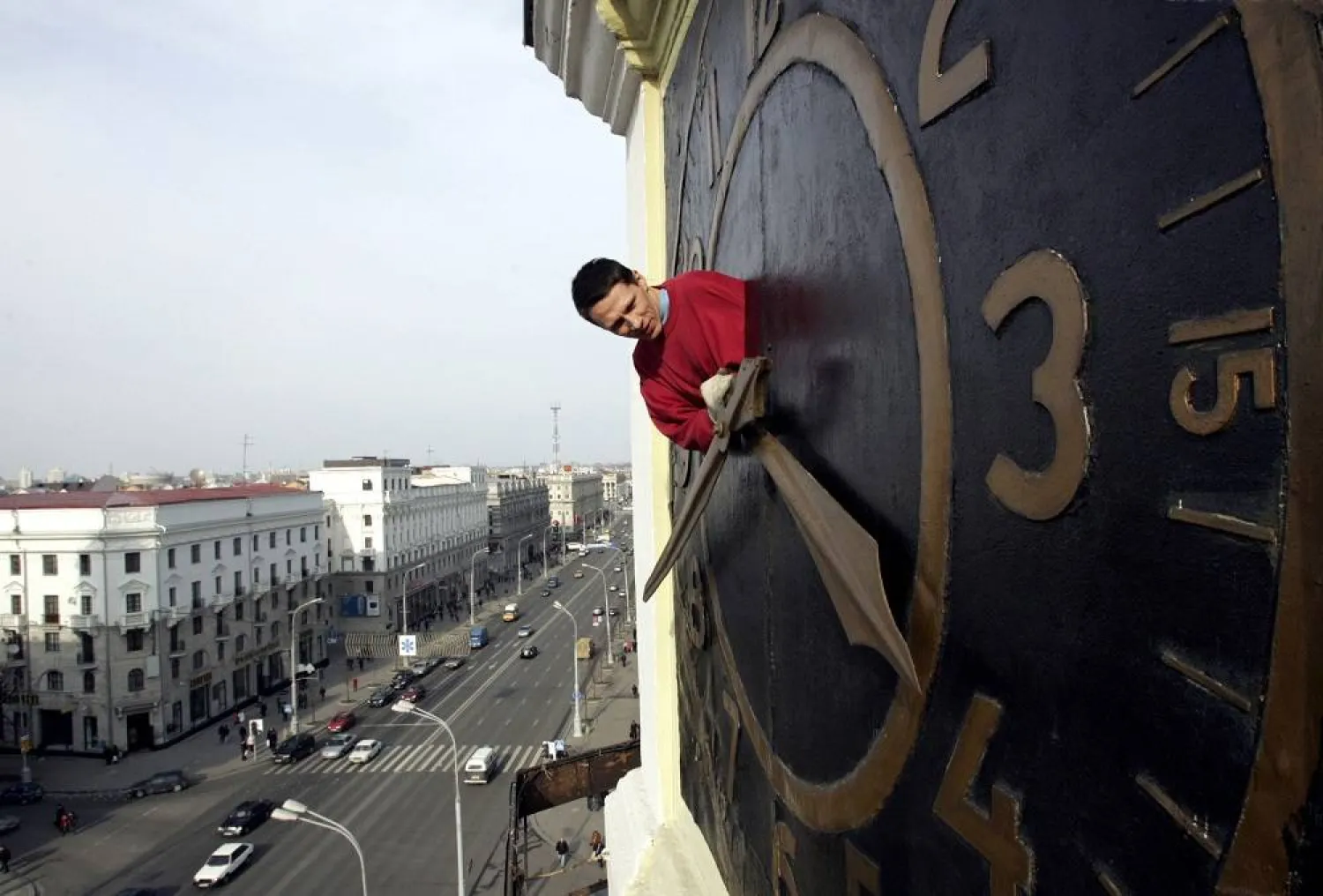
Technician Oleg Ryabtsev performs maintenance work on a clock in Minsk, Belarus, Saturday, March 29, 2008. (AP)
TT

Why Are Clocks Set Forward in the Spring? Thank Wars, Confusion and a Hunger for Sunlight 

Technician Oleg Ryabtsev performs maintenance work on a clock in Minsk, Belarus, Saturday, March 29, 2008. (AP)

Once again, most Americans will set their clocks forward by one hour this weekend, losing perhaps a bit of sleep but gaining more glorious sunlight in the evenings as the days warm into summer.

Where did this all come from, though?

How we came to move the clock forward in the spring, and then push it back in the fall, is a tale of that spans over more than a century — one that's driven by two world wars, mass confusion at times and a human desire to bask in the sun for a long as possible.

There's been plenty of debate over the practice, but about 70 countries — about 40% of those across the globe — currently use what Americans call daylight saving time.

While springing the clocks forward "kind of jolts our system," the extra daylight gets people outdoors, exercising and having fun, says Anne Buckle, web editor at timeanddate.com, which features information on time, time zones and astronomy.

"The really, really awesome advantage is the bright evenings, right?" she says. "It is actually having hours of daylight after you come home from work to spend time with your family or activities. And that is wonderful."

Here are some things to know so you'll be conversant about the practice of humans changing time:

HOW DID THIS ALL GET STARTED? In the 1890s, George Vernon Hudson, an astronomer and entomologist in New Zealand, proposed a time shift in the spring and fall to increase the daylight. And in the early 1900s, British home builder William Willett, troubled that people weren't up enjoying the morning sunlight, made a similar push. But neither proposal gained enough traction to be implemented.

Germany began using daylight saving time during World War I with the thought that it would save energy. Other countries, including the United States, soon followed suit. During World War II, the US once again instituted what was dubbed "war time" nationwide, this time year-round.

In the United States today, every state except Hawaii and Arizona observes daylight saving time. Around the world, Europe, much of Canada and part of Australia also implement it, while Russia and Asia don’t currently.

INCONSISTENCY AND MASS CONFUSION After World War II, a patchwork of timekeeping emerged across the United States, with some areas keeping daylight saving time and others ditching it.

"You might have one town has daylight saving time, the neighboring town might have daylight saving time but start it and end it on different dates and the third neighboring town might not have it at all," says David Prerau, author of the book "Seize the Daylight: The Curious and Contentious Story of Daylight Saving Time."

At one point, if riders on a 35-mile (56-kilometer) bus ride from Steubenville, Ohio, to Moundsville, West Virginia, wanted their watches to be accurate, they'd need to change them seven times as they dipped in and out of daylight saving time, Prerau says.

So in 1966, the US Congress passed the Uniform Time Act, which says states can either implement daylight saving time or not, but it has to be statewide. The act also mandates the day that daylight saving time starts and ends across the country.

Confusion over the time change isn't just something from the past. In the nation of Lebanon last spring, chaos ensued when the government announced a last-minute decision to delay the start of daylight saving time by a month — until the end of the Muslim holy month of Ramadan. Some institutions made the change and others refused as citizens tried to piece together their schedules. Within days, the decision was reversed.

"It really turned into a huge mess where nobody knew what time it was," Buckle says.

WHAT WOULD IT BE LIKE IF WE DIDN'T CHANGE THE CLOCKS? Changing the clocks twice a year leads to a lot of grumbling, and pushes to either use standard time all year, or stick to daylight saving time all year often crop up.

During the 1970s energy crisis, the US started doing daylight saving time all year long, and Americans didn't like it. With the sun not rising in the winter in some areas till around 9 a.m. or even later, people were waking up in the dark, going to work in the dark and sending their children to school in the dark, Prerau says.

"It became very unpopular very quickly," Prerau says.

And, he notes, using standard time all year would mean losing that extra hour of daylight for eight months in the evenings in the United States.

A NOD TO THE EARLY ADOPTERS In 1908, the Canadian city of Thunder Bay — then the two cities of Fort William and Port Arthur — changed from the central time zone to the eastern time zone for the summer and fall after a citizen named John Hewitson argued that would afford an extra hour of daylight to enjoy the outdoors, says Michael deJong, curator/archivist at the Thunder Bay Museum.

The next year, though, Port Arthur stayed on eastern time, while Fort William changed back to central time in the fall, which, predictably, "led to all sorts of confusion," deJong says.

Today, the city of Thunder Bay is on eastern time, and observes daylight saving time, giving the area, "just delightfully warm, long days to enjoy" in the summer, says Paul Pepe, tourism manager for Thunder Bay Community Economic Development Commission.

The city, located on Lake Superior, is far enough north that the sun sets at around 10 p.m. in the summer, Pepe says, and that helps make up for their cold dark winters. Residents, he says, tend to go on vacations in the winter and stay home in the summer: "I think for a lot of folks here, the long days, the warm summer temperatures, it's a vacation in your backyard."



Once a National Obsession, Traditional Korean Wrestling Fights for Survival 

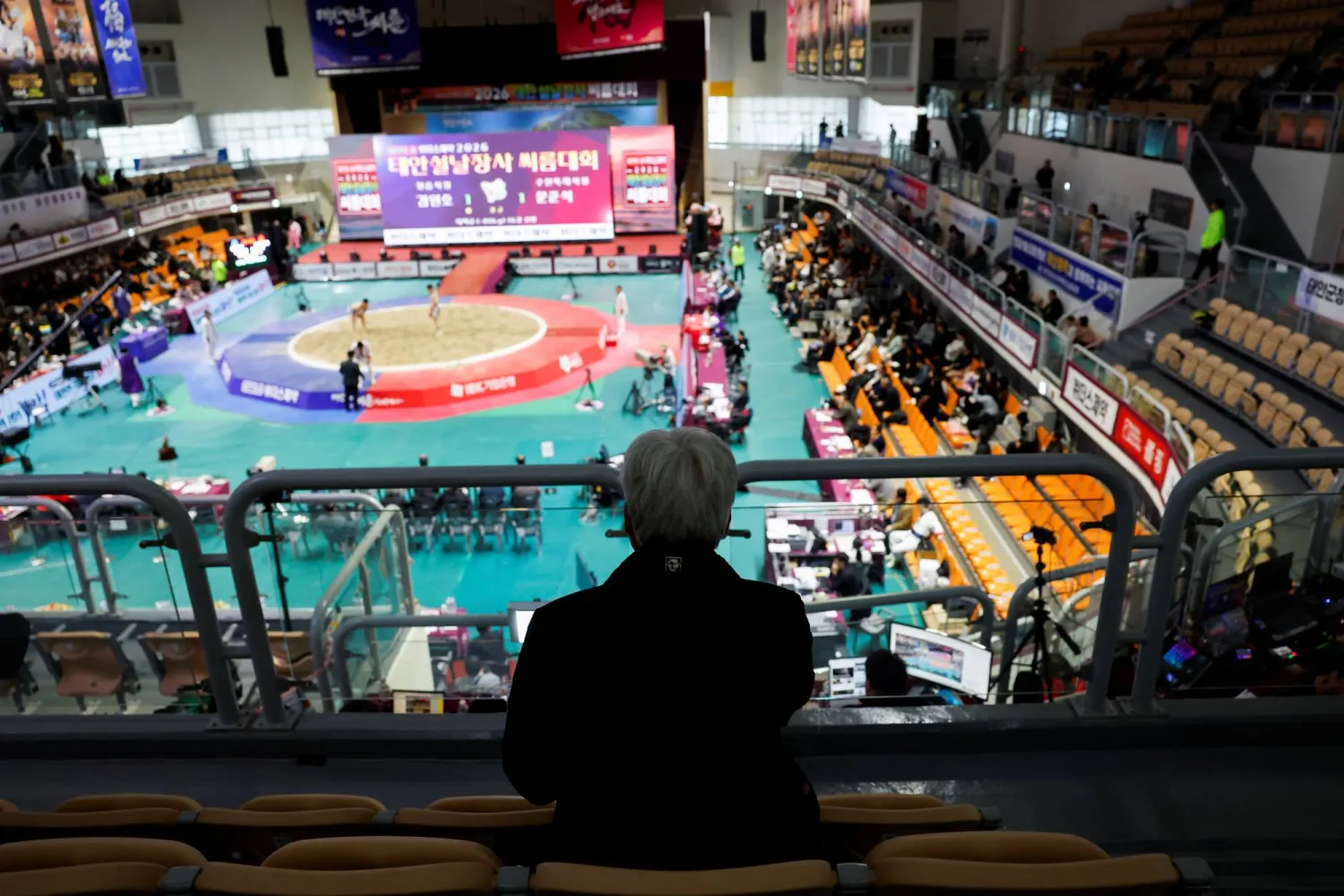
An elderly spectator watches a ssireum match during a Lunar New Year Ssireum championship at the Taean Complex Indoor Gymnasium in Taean, South Korea, February 14, 2026. (Reuters)
TT

Once a National Obsession, Traditional Korean Wrestling Fights for Survival 

An elderly spectator watches a ssireum match during a Lunar New Year Ssireum championship at the Taean Complex Indoor Gymnasium in Taean, South Korea, February 14, 2026. (Reuters)

As South Korea's global cultural influence expands in areas such as music, film and television, one form of entertainment struggling to attract attention even at home is Korea's traditional style of wrestling, known as ssireum.

Ssireum - pronounced like "see room" - had its heyday in the 1980s and early 1990s, when there were as many as eight professional teams and the top wrestlers became household names. Since then, it has been squeezed by tighter budgets and a public quick to move on to new trends.

Twenty-year-old Lee Eun-soo, who began training at the age ‌of nine, is ‌taking part in this year's Lunar New Year ‌tournament, ⁠the showcase event ⁠for the more than 1,500-year-old sport.

Lee lamented that at his former high school, the ssireum team currently has no members and there is talk of disbanding it.

"I once tried to imagine my life if I hadn’t done ssireum," Lee said. "I don’t think I could live without it."

A ssireum match involves two wrestlers facing off in an ⁠eight-meter (26.25 ft) sandpit ring, gripping each other by a ‌cloth belt called a "satba" and using ‌strength, balance, timing and stamina to force the opponent to the ground.

Ssireum ‌was inscribed on UNESCO's Representative List of the Intangible Cultural Heritage ‌of Humanity in 2018, but that international recognition has not translated into commercial success. Its relative obscurity contrasts with the high profile of Japan's sumo, another centuries-old form of wrestling.

Unlike sumo, which is supported by ‌a centralized professional ranking system and six major annual tournaments - or Olympic wrestling, with its global reach - ⁠ssireum remains ⁠largely domestic.

"Sport is something people won't come to watch if they don’t know the wrestlers or even the sport itself," said Lee Tae-hyun, a former ssireum wrestler and Professor of Martial Arts at Yong In University, who has promoted the sport overseas and believes it has commercial potential with the right backing.

Lee Hye-soo, 25, a spectator at the Lunar New Year tournament, said many Koreans are now unfamiliar with ssireum.

"My grandfather liked watching ssireum, so I watched it with him a lot when I was young," she said.

"I like it now too, but I think it would be even better if it became more famous."


Saudi Arabia Concludes Guest of Honor Role at Damascus International Book Fair 2026

The Kingdom’s pavilion, led by the commission, attracted strong attendance and active engagement through its cultural activities - SPA
TT

Saudi Arabia Concludes Guest of Honor Role at Damascus International Book Fair 2026

The Kingdom’s pavilion, led by the commission, attracted strong attendance and active engagement through its cultural activities - SPA

The Literature, Publishing and Translation Commission concluded the Kingdom’s Guest of Honor participation at the Damascus International Book Fair 2026, held in the Syrian capital from February 6 to 16, drawing strong attendance and engagement from visitors and cultural enthusiasts.

The Kingdom's pavilion was highly praised for its rich cultural content and high-quality programs, reflecting the vitality and growth of the Kingdom’s literary and cultural scene, SPA reported.

Literature, Publishing and Translation Commission CEO Dr. Abdullatif Abdulaziz Al-Wasel stated that the Kingdom’s role as Guest of Honor at the Damascus International Book Fair 2026, represented by a high-level cultural delegation led by Minister of Culture Prince Bader bin Abdullah bin Farhan, highlights the depth of Saudi-Syrian cultural relations based on partnership and mutual respect.

He noted that the participation demonstrates the Kingdom’s commitment to enhancing cultural exchange, a key objective of the National Culture Strategy under Saudi Vision 2030. Through this strategy, the commission emphasizes fostering constructive dialogue among peoples, exchanging knowledge and expertise, and consolidating the Kingdom’s active role in the Arab and international cultural landscape.

The Kingdom’s pavilion, led by the commission, attracted strong attendance and active engagement through its cultural activities. It showcased the commission’s programs and initiatives in literature, publishing, and translation, and featured a comprehensive cultural program, including literary seminars, cultural discussions, and poetry evenings with prominent Saudi writers and intellectuals.

These efforts enriched cultural dialogue with fair visitors and strengthened the presence of Saudi literature in the Arab cultural scene.

This edition of the Damascus International Book Fair marks a significant cultural milestone, reaffirming the value of books as carriers of meaning, spaces for dialogue, and starting points for a cultural journey that reflects the aspirations of the Arab cultural landscape toward a more open and aware phase.


Qiddiya City Begins Construction of Landmark Performing Arts Center

The Qiddiya Performing Arts Center supports the city’s positioning as a destination for creativity and cultural expression - SPA
TT

Qiddiya City Begins Construction of Landmark Performing Arts Center

The Qiddiya Performing Arts Center supports the city’s positioning as a destination for creativity and cultural expression - SPA

Qiddiya Investment Company has announced the commencement of construction works for the Performing Arts Center in Qiddiya City, marking an important milestone in the development of Qiddiya City as a destination for entertainment, sports and culture.

The announcement coincided with the laying of the foundation stone, signaling the start of construction works to be carried out by Nesma and Partners.

During the ceremony, held at the project site perched on the edge of the Tuwaiq Mountains, Managing Director of Qiddiya Investment Company Abdullah Aldawood delivered a speech announcing the official start of construction. He highlighted the importance of the project as a transformative addition that strengthens Qiddiya City’s cultural offering.

The Qiddiya Performing Arts Center supports the city’s positioning as a destination for creativity and cultural expression, while contributing to the development of local talent and attracting international artistic experiences.

The Qiddiya Performing Arts Center has been designed by Tom Wiscombe Architecture, in collaboration with BSBG, and features a futuristic architectural style defined by monumental forms. The design comprises interlocking architectural panels and five illuminated blades that blend harmoniously with the desert landscape, forming a prominent cultural landmark within Qiddiya City.

The start of construction follows the launch of the first phase of Qiddiya City in December 2025, which included the opening of Six Flags Qiddiya City. It’s part of the company’s broader approach to developing integrated destinations that enhance quality of life and deliver distinctive experiences across entertainment, sports and culture.